Fat Bloom
Temperature swings let cocoa butter soften and re-crystallise as a dull surface coating.


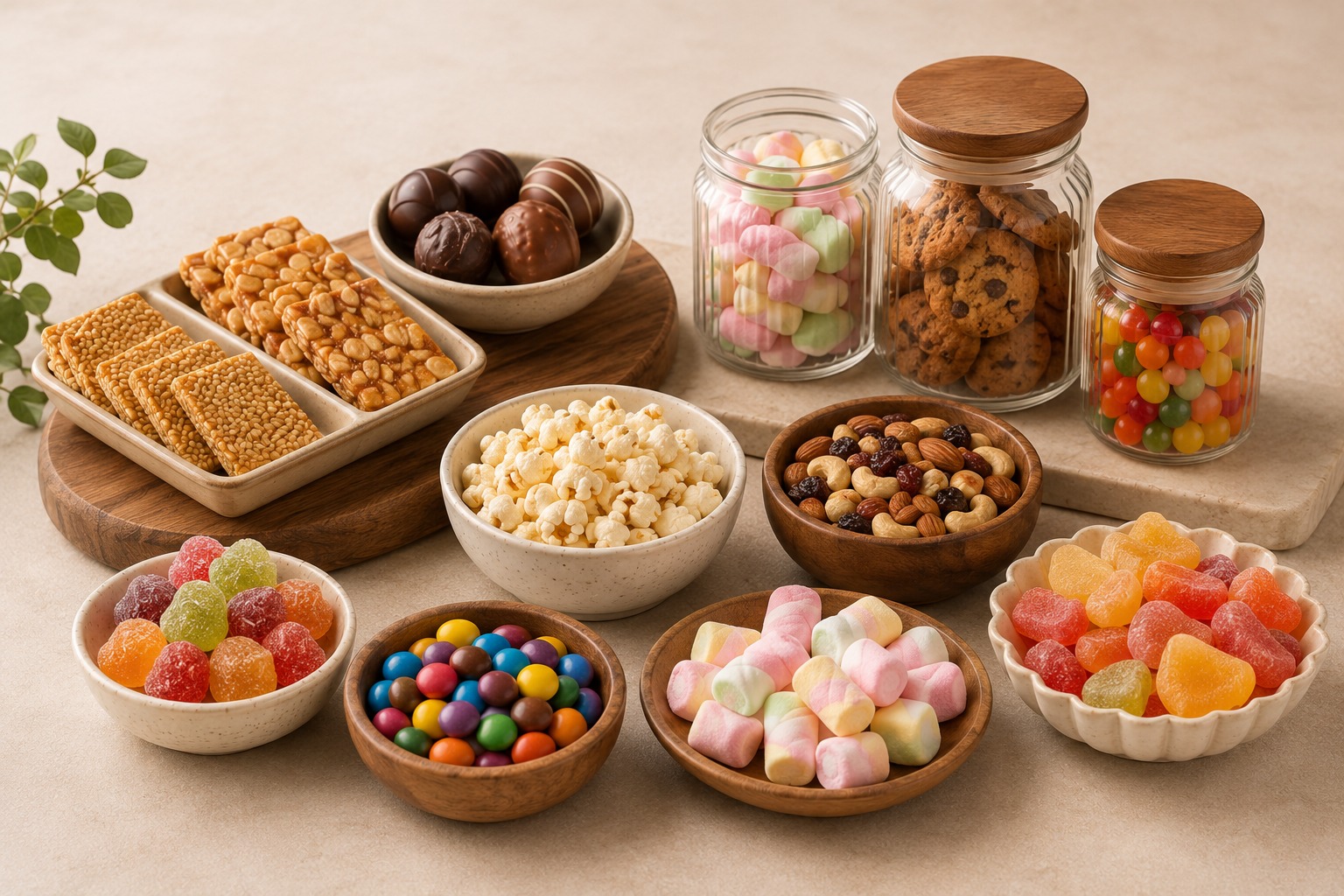
Chocolate, sweets, toffees, candies, and gummies belong to the list of products that are highly sensitive to changes in temperature during the FMCG logistics. If stored at high temperatures, they become soft, melted, and loose their form; if stored at low temperatures, the risk of sugar crystallization, texture alteration, and condensation of moisture inside packaging arises. However, the regular cold storage warehouses operating at 0-4°C, as well as frozen warehouses operating at sub-zero temperatures, are bad for confectionary products. This is the reason that leading candy brands make use of specialized refrigerated warehouses where the temperature is kept between 10-18°C and the relative humidity level is less than 50%.
Chocolates, hard candies, toffees and gums are sensitive to both temperature and moisture. These conditions protect product quality at every stage.
| Condition | Recommended Range | What Happens Outside It |
|---|---|---|
| Storage temperature | 10°C–18°C (50°F–65°F) | Chocolate-based products soften or melt; sugar-based products become sticky and lose texture. |
| Refrigerated / frozen storage | 0°C–4°C or below 0°C—both too cold | Condensation during warming can cause bloom, graining and stickiness. |
| Ambient / dry storage | Uncontrolled and seasonally variable | Indian summer temperatures can exceed 18°C, exposing stock to softening and moisture fluctuations. |
| Relative humidity | Below 50% RH | Hygroscopic sugar absorbs moisture, leading to stickiness, mold growth and crystallisation. |
The narrow safe zone calls for dedicated temperature- and humidity-controlled storage and transport rather than ambient, refrigerated or frozen warehousing.
Stable conditions help prevent the most common appearance, texture and flavour problems affecting confectionery stock.
Temperature swings let cocoa butter soften and re-crystallise as a dull surface coating.
Humidity or condensation dissolves surface sugar that re-crystallises into a gritty white layer.
Hygroscopic sugar absorbs airborne moisture, making products tacky and encouraging mold over time.
Confectionery can absorb surrounding smells and should remain in segregated, odour-controlled zones.
A controlled and monitored workflow protects each shipment from the factory gate to the retail shelf.
Incoming quality and temperature are checked before chamber storage.
Pallets stay at 10°C–18°C and below 50% RH in odour-segregated zones.
Conditions are recorded at fixed intervals so deviations are identified promptly.
Appropriate FIFO, FEFO or LIFO handling reduces ambient exposure.
The required conditions continue through transit and last-mile delivery.
Confectionery handling should follow applicable FSSAI food-safety, hygiene, segregation and record-keeping requirements.
Having been in cold chain logistics for 63+ years, Singhania Logistics runs food-grade, FSSAI-compliant cold storage facilities for confectionery and bakery items. The range of our confectionery warehouse services includes:
Common answers about confectionery storage conditions, compliance and cold-chain transport.