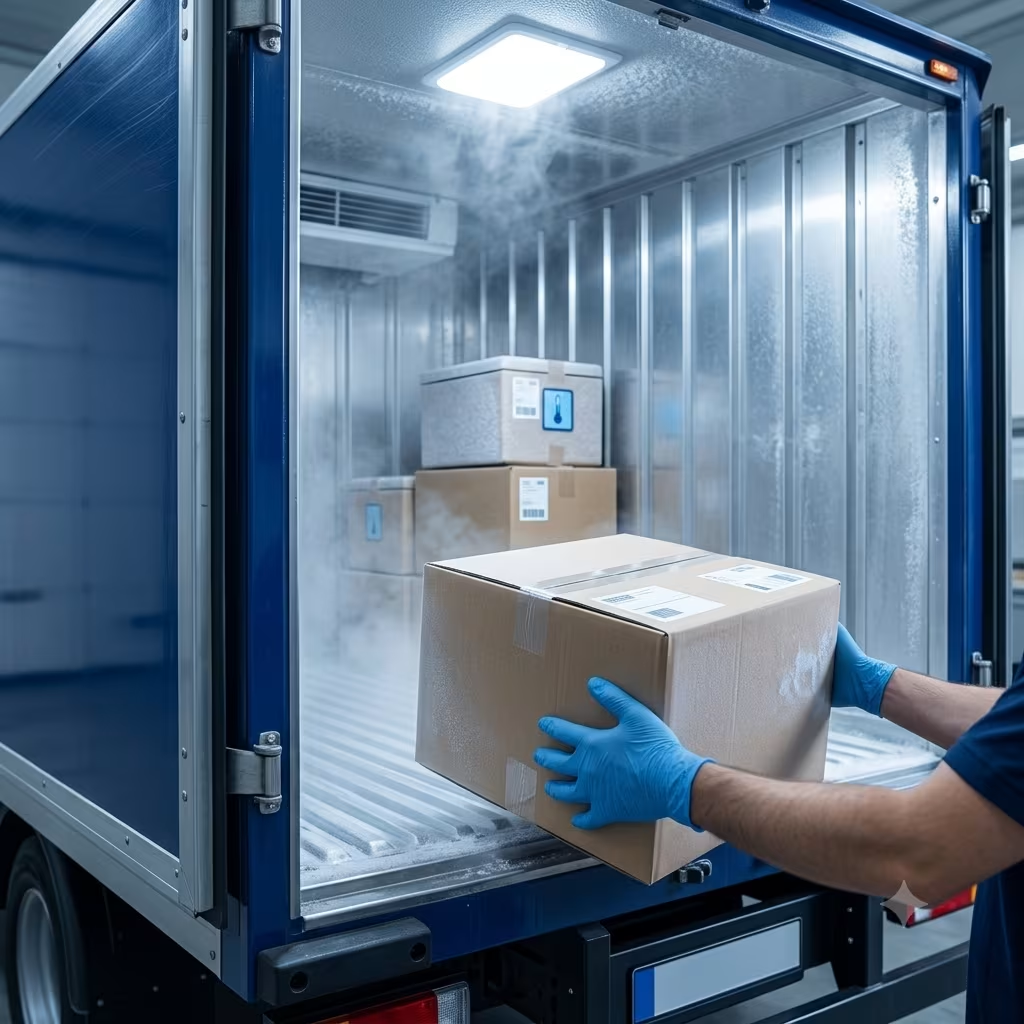
Pre-cooled loading
Cargo box at set point before the first carton moves.


In the competitive market environment that exists today, frozen food transport refrigerated trucks are highly significant since they can preserve product quality. The key factor here is the correct temperature. If the temperature is right, bacteria can't develop and thus preserve freshness. The companies turn to services for the transport of frozen food because of the necessity of a cold chain.
Our company, Singhania Logistics, offers you a variety of transport solutions that can guarantee you safe and efficient delivery of frozen and perishable products due to our modern freezer vans and refrigerated trucks. We provide you with all the necessary services for temperature control. ​ Our services include: Freezer Vans – best suited for the transport of frozen meat, fish, and other frozen foods. Chiller Vans (0 deg. C – 20 °C). Suitable for the transportation of fresh fruit and vegetables and milk products Cold Chain Logistic Services for various industries Our services are aimed at maintaining the precise temperature and preventing product spoilage. You get guaranteed reliability with our cold chain logistics services.
Cargo box at set point before the first carton moves.
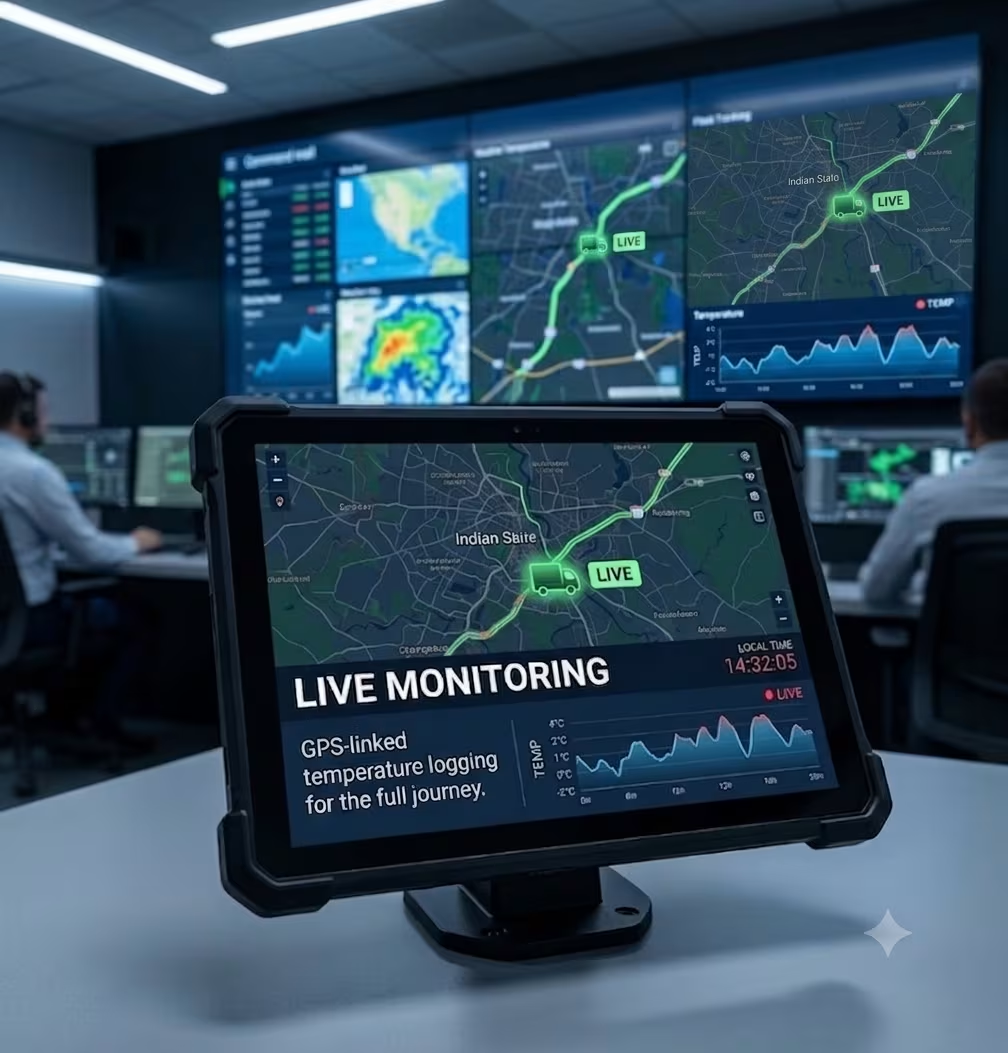
GPS-linked temperature logging for the full journey.
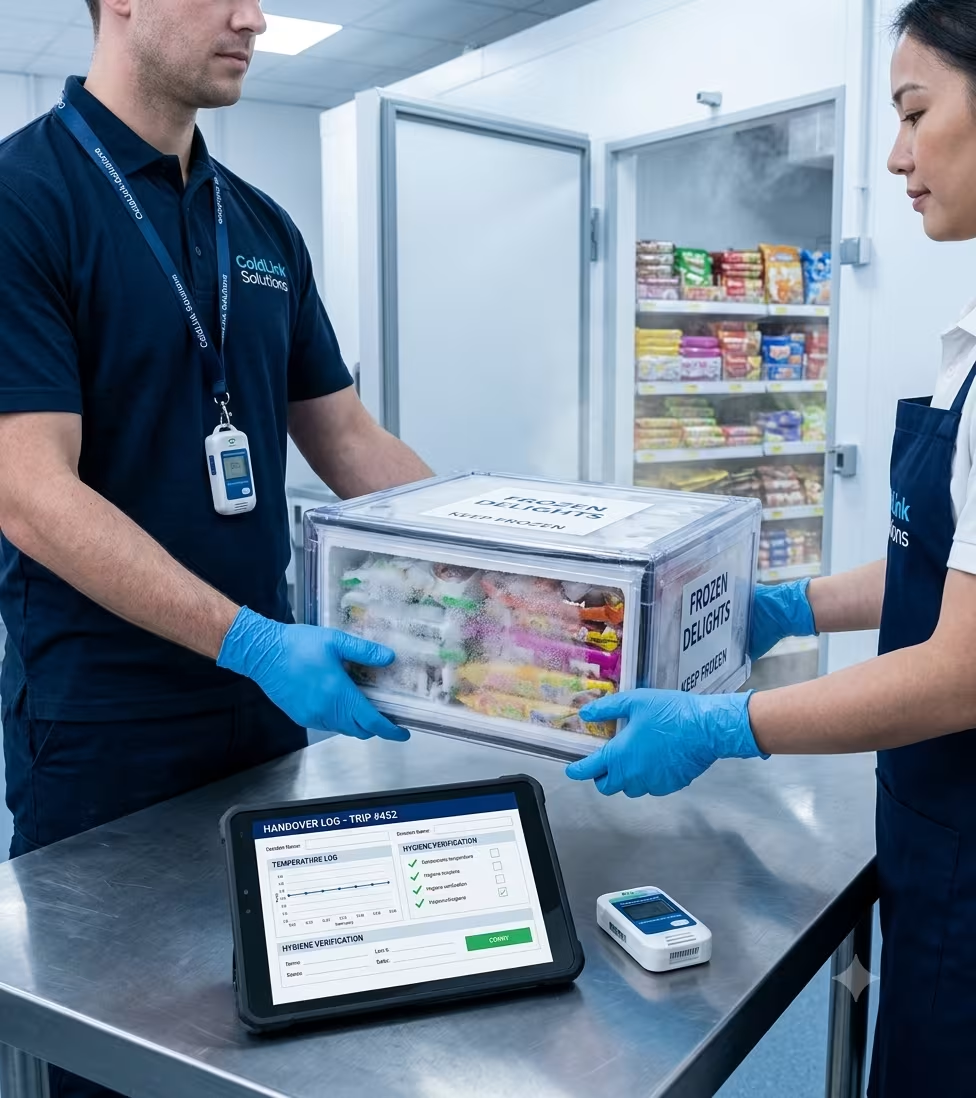
Straight into your freezer, with records per trip.
Different products in the frozen and chilled chain require different set points – and the tolerance for drift is small. Here's what we run our vans at:
| Product Category | Required Temperature | What Happens Outside It |
|---|---|---|
| Frozen food (meat, seafood, ready meals, fries) | −18°C or colder (FSSAI standard) | Partial thawing causes drip loss, texture damage, and bacterial growth that refreezing cannot undo |
| Ice cream & frozen desserts | −18°C to −25°C, held steady | Fluctuation causes heat shock — icy, grainy texture even without visible melting |
| Chilled dairy & fresh produce (chiller van) | 0°C to 4°C | Warmer temperatures push product into the bacterial danger zone; freezing damages produce cells |
| Danger zone (all food) | 5°C to 60°C — must be avoided | Bacteria multiply fastest in this band; time spent here is cumulative and irreversible |
That's because in most of India, ambient temperatures lie deep within the danger zone for a large part of the year. Ordinary trucking, or even short unrefrigerated legs, cannot accommodate frozen food. It needs dedicated reefer vans that maintain the set point from dock to delivery.
We usually get calls from food companies when a load shows up thawed, freezer-burned, or is turned away at the receiving dock – almost always a broken cold chain, not a bad freezer at either end:
A load can read −18°C at delivery and still have spent an hour in the danger zone mid-route — which is why continuous in-transit monitoring, not an endpoint check, is the core of our service.
Each consignment undergoes a controlled, monitored process from cold store dock to your receiving freezer:
This unbroken temperature discipline at every handover point is what separates true frozen cold chain transport from simply owning a refrigerated vehicle.
The FSSAI's food safety requirements apply to the transportation of frozen food. These include hygiene of vehicles, maintaining −18° Celsius or below for frozen products, segregation of raw and ready-to-eat items, and maintaining temperature records. When evaluating a refrigerated van partner for frozen food, it's worth confirming:
Frozen food must be transported at −18°C or colder throughout the journey, as required by FSSAI standards. Chilled (non-frozen) products like dairy, fruit, and vegetables move in the 0°C to 4°C range in chiller vans.
A freezer van holds sub-zero temperatures (−18°C to −25°C) for frozen meat, seafood, ice cream, and ready meals. A chiller van holds above-freezing temperatures (typically 0°C to 4°C) for fresh produce, dairy, and other perishables that must stay cold but not frozen.
No. Once frozen food thaws above 5°C, bacteria multiply rapidly and refreezing only pauses that growth — it does not reverse it. Thawed-and-refrozen stock also suffers drip loss and texture damage, so it is treated as a rejected load.
Freezer burn is dehydration caused by temperature fluctuation — repeated warming and cooling draws moisture out of the product surface, leaving dry, discoloured patches. Holding a steady −18°C, not just a cold average, is what prevents it.
The danger zone is roughly 5°C to 60°C, where bacteria multiply fastest. Cold chain transport exists to keep food out of this zone at every stage — including loading, transit, and unloading, not just inside the warehouse.
Yes. FSSAI's food safety standards cover transport vehicles as well as warehouses — including maintaining −18°C or below for frozen food, cargo-area hygiene, segregation of raw and ready-to-eat items, and temperature record-keeping.
Only with proper segregation — sealed packaging, physical separation, and no shared drip paths — since cross-contamination from raw meat, poultry, or seafood to ready-to-eat items is a food-safety violation even at frozen temperatures.
Reliable cold chain providers log cargo-box temperature at short, fixed intervals with GPS-linked telematics, so any deviation is flagged in real time rather than discovered when the doors open at delivery.
A reefer unit is designed to hold temperature, not to freeze warm cargo. Pre-cooling the cargo box to −18°C before loading prevents the first stretch of the journey from acting as a warm-up period for the product.